The $500 Firewood Question
Can Burning Wood Actually Save You Money This Winter?
An American homeowner’s guide to choosing firewood, figuring out how much to buy, and deciding whether a fireplace can compete with expensive propane.
There’s something satisfying about a wood-burning fireplace. Then you check the propane bill: $300, $400, maybe $500. Suddenly that fireplace starts looking like a financial opportunity. But can you actually save money, or are you buying an expensive atmosphere? The answer depends on the wood, the price, and—most importantly—the appliance.
1. Not all firewood is created equal
A cord measures stacked volume (4 × 4 × 8 feet = 128 cubic feet), including air gaps—not heat. Dense hardwood usually supplies more energy per cord, but that does not automatically make it the cheapest heat.
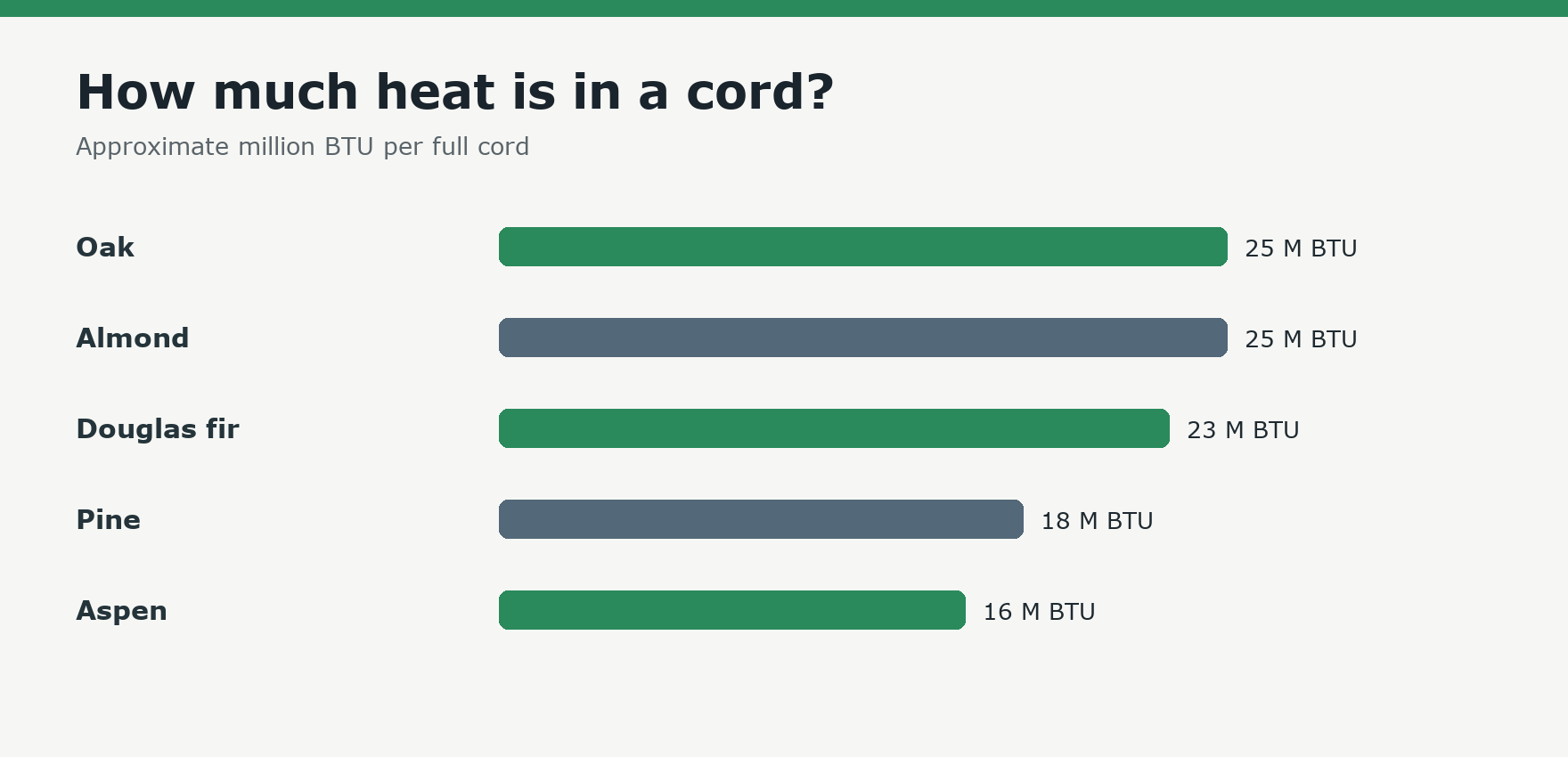
Values vary by species, moisture and stacking. The smartest purchase is the lowest cost per usable BTU, not simply the longest-burning log.
2. What firewood costs in Reno
For illustration, one regional supplier advertised the following full-cord prices. Prices can change and delivery, stacking and tax may be additional.
| Wood | Example full cord | Example half cord |
|---|---|---|
| Pine / fir | $360 | $240 |
| Oak | $525 | $325 |
| Almond | $525 | $325 |
| Mixed | $465 | $295 |
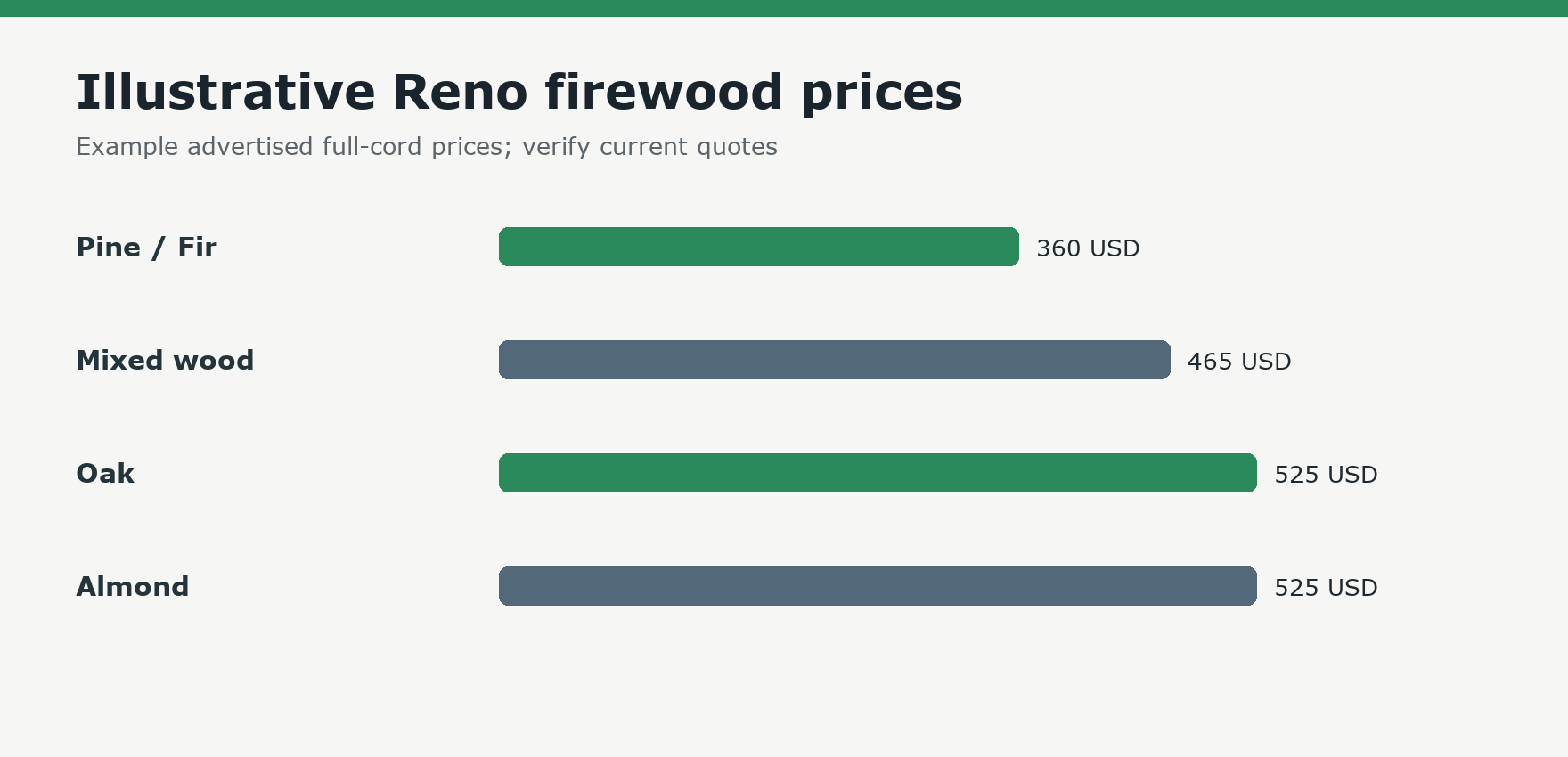
At 25 million BTU per cord, $525 oak costs about $21 per million BTU of fuel. At 18 million BTU per cord, $360 pine/fir costs about $20. The difference is much smaller than the sticker prices suggest.
3. How much should you buy?
A log count is an imprecise measure because splits vary enormously. For a rough example, assume 500–800 average splits per cord. At 20 logs per day over 120 days, that is about 3–5 cords. At $360 per cord, the wood alone costs roughly $1,080–$1,800. Measure your own burn rate before committing to several cords.
| Use | Practical initial purchase |
|---|---|
| Occasional evenings | ¼–½ cord |
| Frequent evening fires | ½–1 cord, then measure |
| Efficient insert for regular heat | Plan 2–4 cords, adjust to home |
| Primary wood heating | Calculate building heat load first |
4. Why the appliance changes everything
An open fireplace can draw heated indoor air up the chimney, bringing cold replacement air into the house. An efficient certified stove or insert transfers much more combustion heat into living space. The following comparison uses illustrative appliance efficiencies, not guarantees.
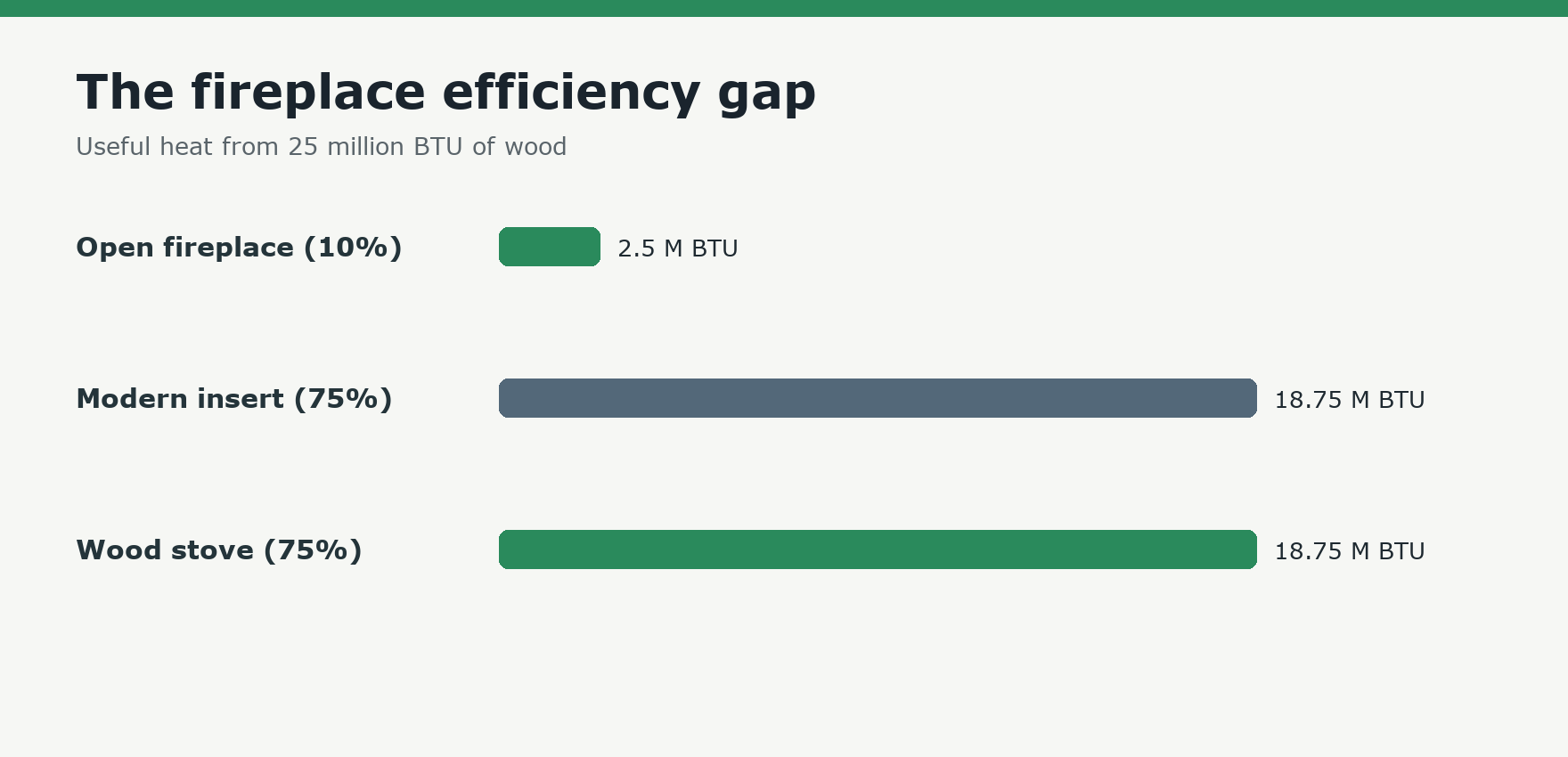
Glass doors alone do not convert an open fireplace into an efficient heater. Factory-built fireplaces may accept only specifically approved inserts; have compatibility and venting evaluated professionally.
5. Four ways to heat with wood
| Option | Advantages | Limitations |
|---|---|---|
| Open fireplace | No major retrofit for occasional use | Poor efficiency; may increase furnace demand |
| Wood insert | Efficient, visible flame, fits some fireplaces | Installation, liner, compatibility checks |
| Freestanding stove | Effective zone heating; some work without power | Clearances, hearth, chimney and space |
| Pellet stove | Automatic fuel feeding | Usually needs electricity and maintenance |
6. Propane versus firewood: actual delivered heat
Assumptions: propane $2.50/gallon, 91,500 BTU/gallon, 90%-efficient furnace; pine/fir $360/cord at 18M BTU; oak $525/cord at 25M BTU; modern wood appliance 75% efficient; open fireplace 10% assumed. These exclude installation, delivery and maintenance.
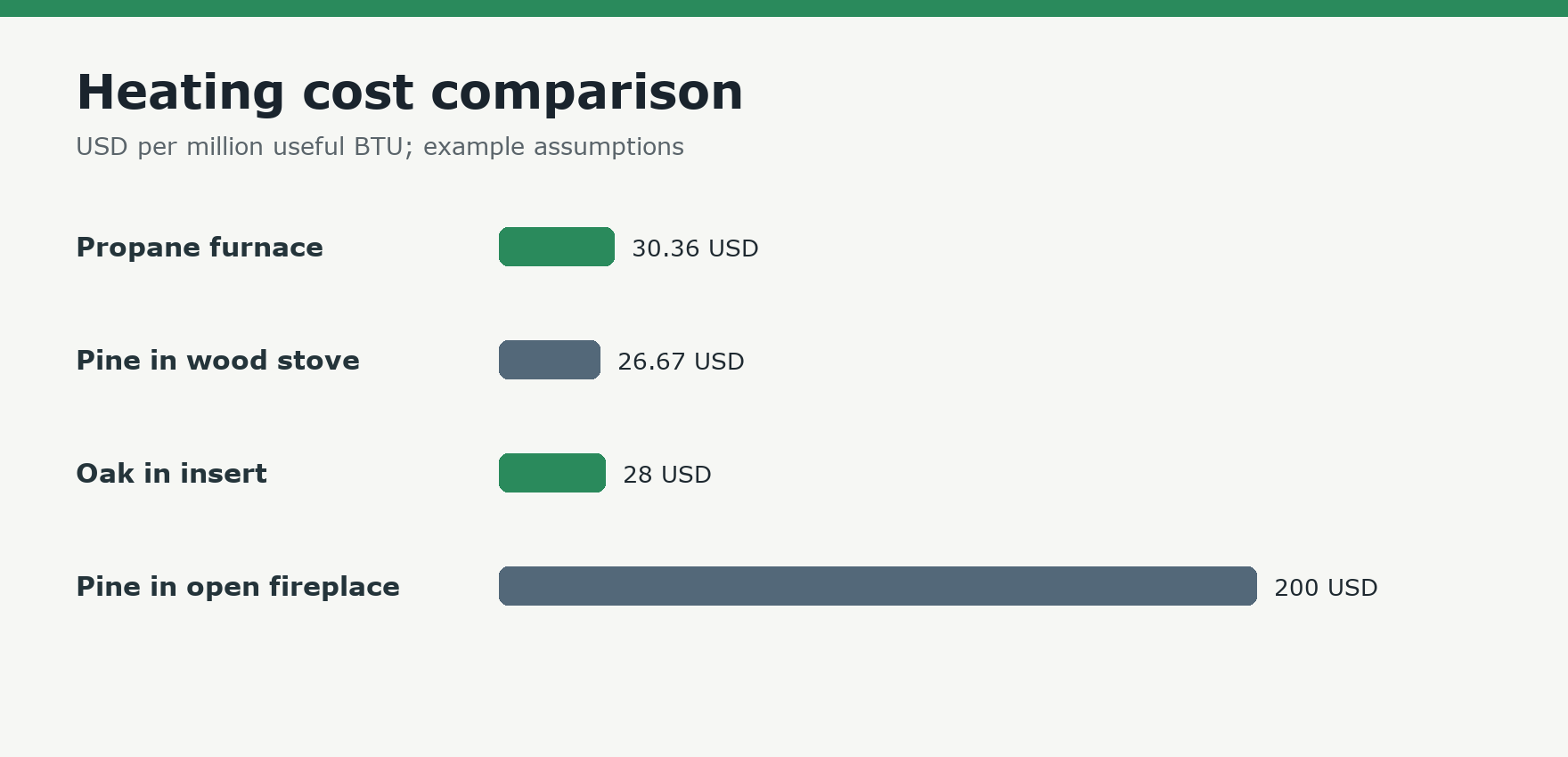
At these prices, efficient wood heating has only a modest fuel-cost advantage over propane. At $4/gallon propane, wood looks more competitive. The furnace may still heat distant rooms, so fuel savings need not equal household bill savings.
7. Could an insert pay for itself?
Suppose an installed insert costs $5,000 and burns three cords of $360 pine/fir per winter. At 75% efficiency, the wood supplies 40.5M useful BTU. A 90% propane furnace would require about 492 gallons to deliver the same heat. At $2.50/gallon that propane costs roughly $1,230, versus $1,080 in wood: only about $150 annual fuel savings, before other expenses. At $4/gallon, the gross fuel savings rise to roughly $887, suggesting a simple payback near six years before maintenance. These are scenarios, not installation quotes or guaranteed savings.
8. What to check before ordering
- Buy seasoned wood, ideally under 20% moisture measured on a freshly split face.
- Confirm whether the quote is for a full cord, half cord, or face cord; specify log length.
- Compare cost per useful BTU, not just price per cord.
- Try a smaller delivery to assess moisture, dimensions and seller reliability.
- Stack wood raised and ventilated, away from the home and other combustible structures.
9. Safety and local restrictions
Have the chimney and appliance inspected and cleaned as needed. Install smoke and carbon monoxide alarms. Never leave an open fire unattended or burning while asleep. Check Washoe County air-quality burn restrictions and local permits, clearance and wildfire requirements. An insert requires professional evaluation, especially in a factory-built fireplace.
10. The bottom line
The biggest mistake is assuming that more wood means less money spent. In an open fireplace, buying expensive hardwood may be a costly way to enjoy a beautiful fire. In an efficient stove or insert, dry reasonably priced wood can help offset propane—but only if the heat reaches the rooms that need it. Before buying three cords, calculate what one cord actually saves.
Profylist helps homeowners research home projects, compare options and connect with qualified contractors without unwanted sales calls. https://profylist.com
Sources and assumptions
- U.S. EPA Burn Wise: https://www.epa.gov/burnwise
- U.S. EPA fireplace and wood-burning guidance: https://www.epa.gov/burnwise/choosing-wood-burning-appliances
- UNH Cooperative Extension, Heating Your Home with Wood: https://extension.unh.edu/natural-resources/forests-trees/woodlot-management/heating-your-home-wood
- All energy and payback examples state assumptions.
Connect with local contractors. Your contact info stays private until you choose.